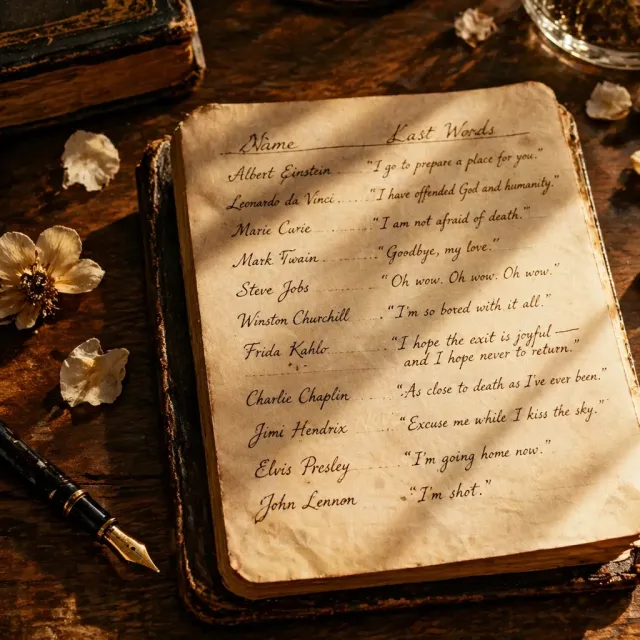
"I go to seek a Great Perhaps."
Those were the last words of the poet François Rabelais, and honestly? They’re the words that changed Miles Halter’s life, and probably yours too if you’ve ever felt like there was something more waiting for you just around the corner. I just finished re-reading Looking for Alaska by John Green, and let me tell you, I am a total mess. My heart is in pieces, but in that beautiful, cathartic way that only a truly perfect book can manage.
If you’ve been hanging around Brooke's Shelf for a while, you know I’m a sucker for a good story that makes me feel everything. Whether it’s unraveling a mystery like in my Daisy Darker review or getting lost in a fantasy world, I love books that leave a mark. And Looking for Alaska? It doesn’t just leave a mark; it leaves a permanent scar on your soul in the best way possible.
The Hunt for the Great Perhaps
Miles Halter is a guy who’s obsessed with last words. He doesn't just collect them; he lives by them. He’s tired of his safe, boring life in Florida, so he decides to head off to Culver Creek Boarding School in Alabama. He’s not running away from anything, though. He’s running toward something. He’s looking for his "Great Perhaps."
Have you ever felt that? That itchy, restless feeling that you’re meant for something bigger, even if you don't know what it is? Stumbling into Culver Creek is Miles's first step into a world that is messier, louder, and infinitely more vibrant than anything he’s ever known. And that’s where he meets the Colonel and, of course, Alaska Young.

The Hurricane That Is Alaska Young
If Miles is the anchor, Alaska Young is the storm. She’s gorgeous, clever, funny, and completely self-destructive. From the second Miles (nicknamed "Pudge" by the Colonel because he’s actually quite skinny) meets her, his life is never the same. She’s the girl who buys books she never reads just so she can have a "Life’s Library." She’s the girl who pulls the best pranks and has the deepest, darkest secrets.
But here’s the thing, Alaska isn't just a "Manic Pixie Dream Girl." John Green writes her with so much complexity that you feel her pain radiating off the page. She’s haunted by her past, specifically a tragic moment with her mother that left her feeling like she’s trapped in a labyrinth.
Their friendship is the heart of the book. It’s that intense, all-consuming teenage bond where you feel like you’d do anything for each other. They’re escaping the mundane together, beginning a journey of discovery that is as much about finding themselves as it is about finding the "Great Perhaps."
The Labyrinth of Suffering
"How will I ever get out of this labyrinth!"
This is the question that haunts the entire story. Alaska sees life as a labyrinth of suffering. For her, the question isn't how to live, but how to escape. This is where the book gets really deep and really fast. It’s not just a YA romance; it’s a philosophical dive into what it means to be alive and how we handle the things that hurt us.

As I was reading, I kept asking myself: Is the labyrinth life, or is it death? Or is it just the way we treat each other? It’s the kind of book that makes you stop and stare at the wall for twenty minutes because you’re rethinking your entire existence. If you loved the emotional complexity of The Naturals, you are going to find so much to chew on here.
The Before and The After
The book is structured in a way that is absolutely genius. It’s divided into "Before" and "After." The "Before" is full of late-night conversations, smoking by the creek, planning legendary pranks, and Miles falling head-over-heels for a girl who is clearly "too much" for him. It’s sunny, it’s exciting, and it feels like the happiest time of their lives.
And then… the "After" happens.

I won’t spoil the exact details if you’re one of the few who haven't read this classic yet, but let’s just say that the shift is gut-wrenching. The "After" is about grief. It’s about the messy, ugly, confusing way we try to make sense of a world that suddenly doesn't make sense anymore. Miles and the Colonel are left trying to solve a mystery they might never find the answer to. They’re left wondering if they ever really knew Alaska at all.
Why It Still Hits Hard in 2026
You might think a book published in 2005 wouldn't still be relevant today, but honestly? It hits harder than ever. In a world where we’re all constantly "connected" but often feel more alone than ever, Miles’s search for meaning and connection is so relatable.
The themes of forgiveness and guilt are universal. We all have things we wish we could take back. We all have "Before" and "After" moments in our lives. John Green captures that raw, teenage vulnerability so perfectly that it feels like he’s reading your own diary. It’s the ultimate contemporary YA read that reminds us that even in the middle of a labyrinth, there is a way through.
The Verdict: A Must-Read Masterpiece
I picked this up again almost as a goof, thinking I’d just breeze through it for some nostalgia, but I ended up staying up until 3:00 AM sobbing into my pillow. It is, without a doubt, a must-read. It’s perfect for anyone who loves deep characters, beautiful prose, and stories that don't give you easy answers.
If you’re looking for your next great read, please, do yourself a favor and pick this up. And when you’re done and your heart is breaking, come back here and we can talk about it!

Have you read Looking for Alaska? Did it destroy you as much as it destroyed me? And more importantly: what’s your "Great Perhaps"? Let me know in the comments or head over to our contact page to share your thoughts!
If you want more emotional rollercoasters, definitely check out our YA book reviews or dive into something a bit darker with our thriller section. There’s always a new story waiting for you at Brooke's Shelf!